

More Cards, More Action
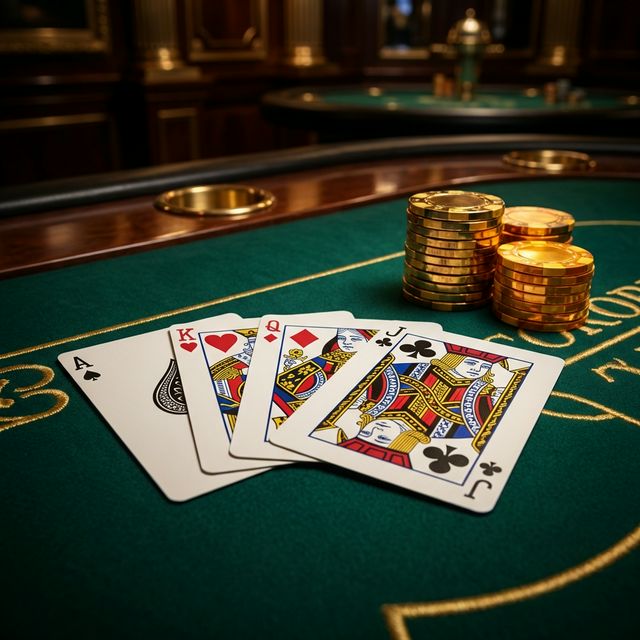
Omaha looks like Texas Hold'em's bigger, wilder cousin. Instead of two hole cards, you get four. Instead of small pots, you get massive swings. Instead of top pair being good, you need the nuts or close to it. Omaha is pure action — more draws, more made hands, and much larger variance than Hold'em. If Hold'em feels slow, Omaha will wake you up.
The Cardinal Rule: You MUST Use Exactly Two
This is where beginners go wrong. In Omaha, you must use exactly two cards from your hand and exactly three cards from the board. Not one card, not three cards, not four cards from your hand — exactly two.
Examples That Break Beginners' Brains
Example 1: The Four-Flush Trap
Your hand: A♠ K♠ Q♠ J♠ (four spades!)
Board: 10♠ 7♦ 4♣ 2♥ 9♣
Your actual hand: Ace-high (you can only use two spades from your hand)
You do NOT have a flush. You can't use all four spades. You must use exactly two from your hand and three from the board.
Example 2: The Straight That Isn't
Your hand: A♠ K♥ 3♦ 2♣
Board: Q♠ J♦ 10♥ 5♣ 4♠
Your actual hand: Ace-high straight? NOPE — King-high at best
You can't make a straight using A-K from your hand because the board doesn't have enough connectors. You must use exactly two.
Example 3: The Proper Full House
Your hand: K♠ K♥ 8♦ 7♣
Board: K♦ 8♠ 8♣ 4♥ 2♠
Your actual hand: Kings full of eights (K♠-K♥ from hand + K♦-8♠-8♣ from board)
This works! You used two kings from your hand and filled out the full house with the board.
Omaha Hi ( PLO Hi)
In standard Omaha Hi, the best high hand wins the entire pot. This is the most common variant, typically played pot-limit (hence "PLO" — Pot-Limit Omaha).
Why Hands Are So Much Bigger
With four hole cards instead of two, you have six different two-card combinations. This means:
PLO Strategy Fundamentals
1. Draw to the Nuts
In Omaha, someone almost always has a monster or a monster draw. If you're drawing to a non-nut hand, you're probably drawing dead. Always ask: "If I hit my draw, can I still lose?"
2. Coordinated Starting Hands
The best Omaha hands work together. You want:
Good Omaha hand: A♠ K♠ Q♥ J♥ (double-suited, connected, high cards)
Weak Omaha hand: A♠ A♥ 8♦ 3♣ (one good pair, three dead cards)
*3. Position Is Even More Critical
With so many drawing possibilities, position lets you control pot size and see what opponents do before committing more chips. Out of position in a big Omaha pot is a nightmare.
4. Expect Massive Variance
Omaha swings are brutal. You can flop the nuts and be a 60/40 favorite, then lose when the turn and river complete someone's backdoor flush draw. Bankroll accordingly.
Omaha Hi-Lo (8 or Better)
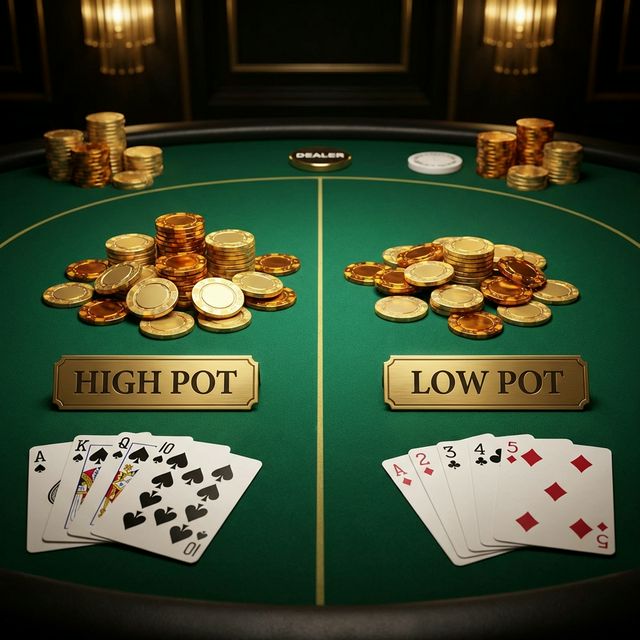
In Omaha Hi-Lo, the pot is split between the best high hand and the best qualifying low hand. This creates fascinating strategy dynamics and even bigger pots.
Low Hand Qualifying Rules
"Eight or Better" means:
To qualify for the low half of the pot, you must have five unpaired cards all 8 or lower. Straights and flushes don't count against you for low hands. Aces are low.
Best possible low: A-2-3-4-5 (the "wheel" or "bicycle")
Note: This is ALSO a straight for the high hand, making it a "scoop" (wins both halves)
Example qualifying low: 8-7-5-3-A
Non-qualifying hand: 9-7-6-4-A (the 9 disqualifies it — must be 8 or better)
Comparing Low Hands
Low hands are read from the top down. Lower is better.
Hand A: 8-6-4-3-A
Hand B: 8-7-5-2-A
Winner: Hand A (8-6 beats 8-7)
Hand C: 7-6-5-4-2
Hand D: 8-4-3-2-A
Winner: Hand C (any 7-high low beats any 8-high low)
Scooping Is the Goal
Winning both the high and low halves of the pot is called scooping. This is where the money is made in Hi-Lo.
Scooping hands:
Quartering danger: If you and an opponent have the same low hand but someone else wins high, you only get 25% of the pot (half of the low half). Avoid getting quartered.
Hi-Lo Strategy
1. A-2 Is Gold
Having A-2 in your hand gives you the nut low draw. Without A-2 (or sometimes A-3), you're often drawing to second-best low, which is dangerous.
2. Beware Counterfeit
If you have A-2-6-7-8 for a low and the board pairs your 6, your low gets "counterfeited" — you now use the board's 6, weakening your low.
3. High-Only Hands Are Dangerous
Playing for high only in Hi-Lo is risky. If there's a qualifying low, you're fighting for half the pot. You need a monster high to make it profitable.
4. Three Low Cards on Board = Action
When the board shows three low cards (8 or below), there's guaranteed to be a low. This is when the action heats up — everyone with A-2 is in.
Common Omaha Mistakes
Using more than two hole cards: Beginners constantly make this error. You must use exactly two.
Overvaluing top pair: In Hold'em, top pair top kicker is strong. In Omaha, it's almost worthless.
Playing four disconnected cards: A-A-9-4 rainbow might look good because of the aces, but three of your cards are trash. Fold.
Drawing to non-nut hands: If you're drawing to the second-best straight or a low flush, you're often drawing deadcasionally.
Ignoring the low in Hi-Lo: In Omaha Hi-Lo, if you're not playing for the scoop, you're leaving money on the table.
Omaha vs. Hold'em: Key Differences
| Aspect | Hold'em | Omaha |
|--------|---------|-------|
| Hole cards | 2 | 4 |
| Cards you must use | 0, 1, or 2 | Exactly 2 |
| Hand strength | Top pair often good | Nuts or close required |
| Variance | Moderate | Extreme |
| Drawing hands | Less common | Very common |
| Common format | No-Limit | Pot-Limit |
Wrapping Up
Omaha is pure adrenaline. Four hole cards mean more combinations, bigger hands, and constant action. The "must use exactly two" rule confuses beginners but becomes second nature with practice. Whether you play PLO Hi for maximum aggression or Omaha Hi-Lo to scoop pots with A-2 magic, Omaha rewards tight starting hand selection and aggressive play when you connect with the board. Expect wild swings, bring a big bankroll, and never, ever fall in love with top pair.

