Spice Up Your Home Game
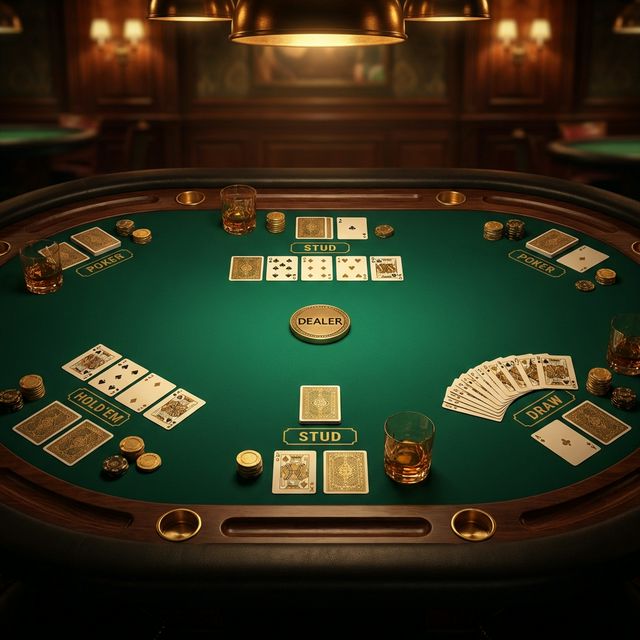
Dealer's choice means the player with the dealer button gets to choose which poker variant the table plays for that hand. The button rotates, so everyone gets to pick their favorite game. This format keeps home games fresh, tests different skill sets, and prevents the night from feeling repetitive. Some players love Hold'em, others crush Stud, and a few degens want to play Double Board Bomb Pots. Dealer's choice gives everyone their moment.
House Protocols for Dealer's Choice
Before you start a dealer's choice session, establish some ground rules:
Approved game list: Agree on which variants are allowed (not everyone knows how to play Badugi)Minimum rounds: Some groups require each game to run for a full orbit (everyone gets the button once)Stakes consistency: Ensure blinds/antes stay proportional across variantsExplanation requirement: If you call a rare game, you must explain the rules clearly7-Card Stud: The Classic
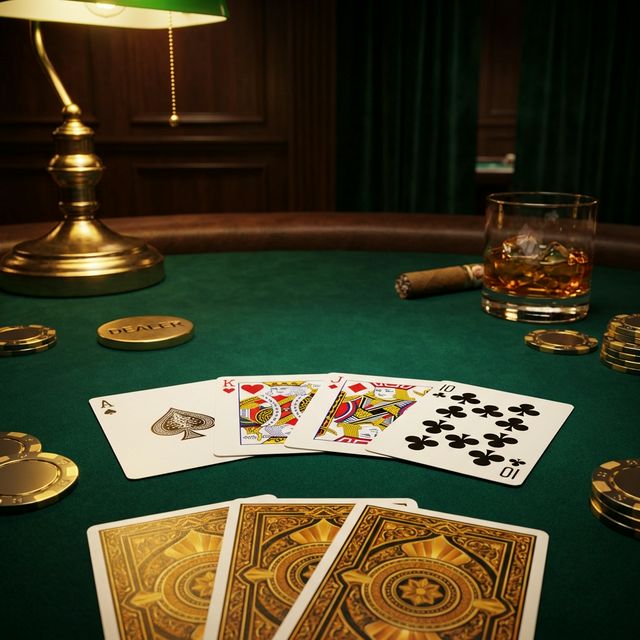
7-Card Stud was the most popular poker game in America before Hold'em took over. There are no community cards — every player gets their own seven cards (some face-up, some face-down).
How to Play
Ante: Everyone posts a small ante (e.g., 10% of the small bet)Third Street: Each player gets two cards face down (hole cards) and one card face up (door card)First betting round: Player with the lowest door card must make a small "bring-in" bet. Action proceeds clockwise.Fourth Street: Each player gets a fourth card face up. Betting starts with the player showing the best hand.Fifth Street: Another face-up card. Betting continues.Sixth Street: Another face-up card. Betting continues.Seventh Street (River): Final card dealt face down. Final betting round.Showdown: Best five-card poker hand wins.Card layout per player: Down-Down-Up-Up-Up-Up-Down (3 down, 4 up)
Strategy Tips
Starting hands matter: three of a kind (rolled-up trips), big pairs, or three to a straight/flushPay attention to dead cards: If you're drawing for a flush and see many of your suit face-up on the table, your outs are goneThe player showing strength acts first: This creates different dynamics than Hold'emRazz: Lowball Madness
Razz is 7-Card Stud played for the lowest hand. Straights and flushes don't count against you, and aces are low. The best possible hand is A-2-3-4-5 (the wheel).
How to Play
Same structure as 7-Card Stud, but:
The highest door card on third street makes the bring-in bet (reversed from Stud)Best low hand showing acts first on later streetsAt showdown, worst five-card poker hand winsReading Low Hands
Low hands are compared from the highest card downward.
8-6-4-3-A beats 8-7-5-2-A (6 is lower than 7)7-6-5-4-3 beats any eight-high handA-2-3-4-5 is the nuts (wheel)Strategy
Start with three low cards: If you don't have three cards 8 or lower, foldAces and deuces are gold: A-2-X is a premium starting handFold if you brick: If you catch high cards (9, 10, J, Q, K) on fourth or fifth street, get outH.O.R.S.E.: The Ultimate Mixed Game
H.O.R.S.E. is a rotation of five poker variants. The game changes every orbit (every time the button makes a full lap around the table). This is a pros' game — it tests your skill across multiple formats.
H = Hold'em (Limit)
O = Omaha Hi-Lo (8 or Better)
R = Razz
S = Stud (7-Card Stud Hi)
E = Eight or Better (7-Card Stud Hi-Lo)
How HORSE Works
Play a full orbit of Limit Hold'emButton moves, game switches to Omaha Hi-Lo for one orbitThen Razz, then Stud, then Stud Hi-LoReturn to Hold'em and repeatSome tables use a visible marker or announce the game change each orbit to avoid confusion.
Why HORSE Is Respected
H.O.R.S.E. is considered the true test of poker skill because it eliminates one-trick ponies. You can't just be a Hold'em specialist. You need to master:
Position and aggression (Hold'em)High-low splits and nut draws (Omaha Hi-Lo)Lowball hand reading (Razz)Live card tracking and door card strategy (Stud)Split pot dynamics and scooping (Stud Hi-Lo)Pineapple: Hold'em with a Twist
Pineapple is Texas Hold'em, but you start with three hole cards instead of two. Before the flop is dealt, you discard one card. Then the hand proceeds like normal Hold'em.
Why It's Fun
Stronger starting hands (picking best two of three)More action pre-flopEasier to connect with the flopStill recognizably Hold'em, so easy to learnStrategy
Don't get married to your third card — throw away the weakest oneCoordinated hands are stronger (e.g., A-K-Q suited beats A-A-7 rainbow)Expect bigger hands post-flop than standard Hold'emCrazy Pineapple: Even Crazier
Crazy Pineapple is like Pineapple, but you keep all three cards until after the flop. Then you discard one before the turn.
Why It's Crazier
You see the flop with three cards, so you know exactly what you haveYou might flop two pair, a set, or a huge drawDeciding which card to discard is agonizing and skill-testingPots get massive because everyone connects harderVariant: Lazy Pineapple
In Lazy Pineapple, you never discard. You keep all three cards and use the best two at showdown. This creates insane action but can be confusing for new players.
Short Deck Hold'em (6+ Hold'em)
Short Deck is no-limit Hold'em played with a stripped deck: all cards 2 through 5 are removed. The deck only has 36 cards (6-7-8-9-10-J-Q-K-A in all suits).
Rule Changes
Flush beats a full house (flushes are rarer in short deck)Ace-6-7-8-9 is a straight (ace can be low)Aces are extremely strong (only 3 ranks above them: K, Q, J)Why It's Popular
Huge action (everyone has big hands pre-flop)Less card removal (shorter deck means flush draws hit more often)Favored by high-stakes cash game players in AsiaStrategy
Play tighter than standard Hold'em (pairs and big cards dominate)Flush draws are more valuable than straight drawsPost-flop play is faster (fewer turn/river cards)Double Board Bomb Pot
This isn't a separate game variant — it's a structure twist. Everyone agrees to put in a set amount (e.g., 5x the big blind) with no pre-flop action. Then two separate boards are dealt, and the pot is split between the best hand on each board.
Rules
Everyone posts the bomb pot amount (no folding pre-flop)Deal hole cards (usually Omaha or Hold'em)Deal two separate five-card boardsBetting starts on the flop (no pre-flop betting)At showdown, pot is split 50/50 between Board A winner and Board B winnerWhy It's Wild
Massive pots with zero fold equity pre-flopYou can scoop both boards if you're luckyForces action from everyone (no nits allowed)Strategy
Play for the scoop (hands that work on both boards)In Omaha double board, coordinated hands (double-suited Broadway) are goldminesBe willing to gamble (you're already pot-committed)Other Fun Variants
2-7 Triple Draw: Lowball draw poker where straights and flushes count against you. 2-3-4-5-7 (the "number two") is the nuts.
Badugi: Four-card lowball where you want four different suits and ranks. A-2-3-4 rainbow is the best hand.
Irish Poker: Hold'em with four hole cards, but you discard two after the flop.
Big O: Five-card Omaha (PLO but with five hole cards instead of four). Absolute chaos.
Tips for Hosting Dealer's Choice
Keep a cheat sheet: Print or display the rules for each game so players can reference themStart simple: Don't introduce Badugi and 2-7 in the same night. Build up to complex variants.Rotate games every orbit: Don't let one player spam their favorite game all nightExplain before you deal: The dealer must explain the rules clearly before cards are dealtBe patient with mistakes: Dealer's choice is about fun, not gotchasWrapping Up
Dealer's choice transforms a standard poker night into a variety show. Hold'em might be the king, but Stud teaches discipline, Razz teaches hand reading, and Pineapple teaches chaos. Rotate through HORSE to crown the true all-around player, or just let everyone spam their favorite weird game. The best home games aren't about stake size — they're about variety, laughter, and the guy who calls Double Board Pineapple Hi-Lo at 2 AM. Keep it fun, keep it moving, and let the dealer choose.


