

Building a Fair and Fun Tournament
Tournaments are the heartbeat of home poker nights. Everyone starts equal, blinds force action, and there's a clear winner at the end. But a poorly structured tournament is misery — blinds that jump too fast, payouts that feel unfair, and a game that drags on until 3 AM. This guide shows you how to build a tournament structure that's balanced, exciting, and actually finishes on time.
Starting Stacks: How Many Chips?
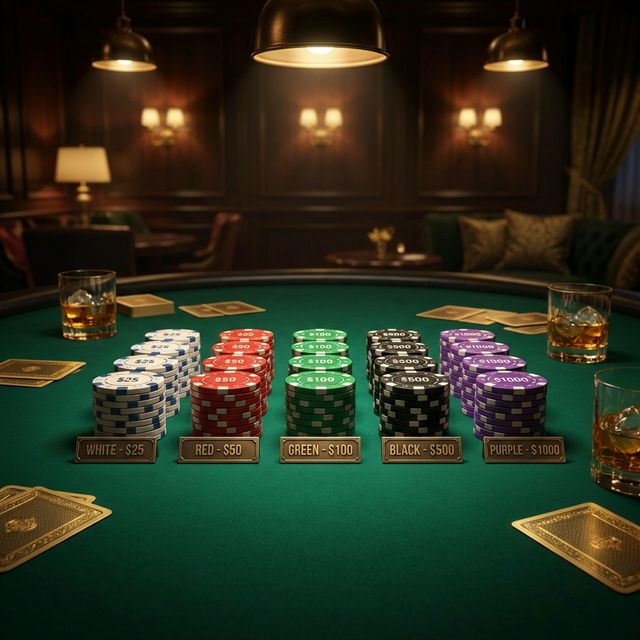
The key question: how many big blinds should players start with?
Standard guideline: 100-200 big blinds
Examples
Fast tournament:
Standard tournament:
Deep stack tournament:
> Pro Tip: Most home games should use 150-200 BB starting stacks. This gives players room to play poker without becoming a shove-fest after 30 minutes.
Blind Level Structure
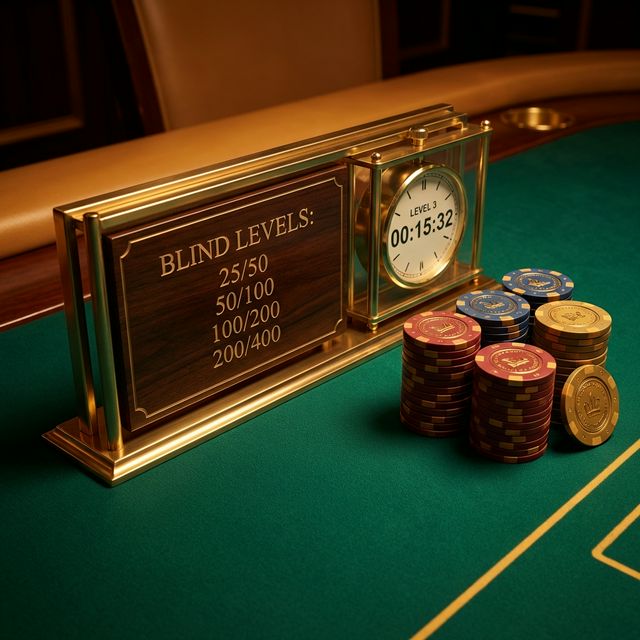
Blinds should increase gradually to maintain playability while forcing action. Here's a proven structure:
Standard 10-Level Structure (200 BB start)
| Level | Small Blind | Big Blind | Ante | BB Count* |
|-------|-------------|-----------|------|------------|
| 1 | 25 | 50 | - | 200 |
| 2 | 50 | 100 | - | 100 |
| 3 | 75 | 150 | - | 67 |
| 4 | 100 | 200 | 25 | 50 |
| 5 | 150 | 300 | 50 | 33 |
| 6 | 200 | 400 | 50 | 25 |
| 7 | 300 | 600 | 75 | 17 |
| 8 | 400 | 800 | 100 | 12 |
| 9 | 600 | 1,200 | 200 | 8 |
| 10 | 800 | 1,600 | 200 | 6 |
*BB Count = average stack in big blinds (assumes 9 players starting with 10,000 each)
When to Introduce Antes
Antes are small forced bets from every player, added to create bigger pots and more action.
General rule: Introduce antes when average stack drops below 50 BB (around Level 4-5).
Antes should be:
Level Duration: How Fast Should Blinds Increase?
Level duration controls how long your tournament runs.
| Duration | Total Time (9 players) | Style | Best For |
|----------|------------------------|-------|----------|
| 8-10 min | 2-2.5 hours | Turbo | Quick weeknight games |
| 12-15 min | 2.5-3.5 hours | Standard | Most home games |
| 20-25 min | 4-5 hours | Deep | Serious weekend games |
| 30+ min | 5-6+ hours | Marathon | Dedicated players only |
Sweet spot for most home games: 12-15 minute levels.
This gives players time to play poker, not just shove-or-fold, while still wrapping up by midnight.
Payout Structures
How you split the prize pool dramatically affects strategy. Top-heavy payouts reward risk-taking. Flatter payouts encourage survival.
Standard Payout Structures
6 players:
7-9 players:
10-12 players:
Top-Heavy vs. Flat Payouts
Top-heavy (Winner-take-all or 70/30):
Flatter (40/30/20/10):
Recommendation: Use 50/30/20 for most home games. It rewards the winner heavily while giving some consolation to 2nd and 3rd.
Break Schedule
Breaks keep players sane and prevent the dreaded "I gotta go" mid-hand.
Standard break schedule:
Example for a 15-minute level tournament:
Rebuys and Add-Ons (Optional)
Some tournaments allow players to buy back in or purchase additional chips.
Rebuy
Definition: If you bust out, you can buy back in for the starting stack amount.
Common rules:
Add-On
Definition: At the end of the rebuy period, all players (even those with chips) can purchase additional chips at a discount.
Example:
Why it works: Builds bigger prize pools and lets players who ran bad early catch up.
Sample Tournament Structures
Quick Weeknight Tournament (2.5 hours)
Standard Friday Night Tournament (3.5 hours)
Common Mistakes
Blinds increase too fast: If your average stack is below 20 BB by Level 5, your structure is too fast. Players are just shoving, not playing poker.
Levels too long: 30-minute levels sound great, but your tournament will run past midnight and people will quit.
No breaks: Forcing a 4-hour game with no bathroom break guarantees someone will miss a hand.
Unclear payout structure: Announce payouts BEFORE the tournament starts. Don't negotiate payouts at the final table (it always causes drama).
No clock/timer: Using your phone and manually tracking levels is a recipe for mistakes. Use a free poker timer app.
Wrapping Up
A good tournament structure is invisible — players don't notice it, they just have fun. Start with 150-200 BB, use 12-15 minute levels, pay the top 3 players, and schedule breaks. Test your structure once, tweak the timing if needed, then run the same structure every week. Consistency builds trust, and trust builds a poker night that lasts for years.

