

Everything You Need to Host a Legendary Poker Night
You don't need a casino-quality table or a $5,000 chip set to host a great poker night. You just need the right essentials, a solid plan, and friends who show up on time (good luck with that last part). This guide breaks down exactly what you need, how much it costs, and the little details that separate a forgettable game from a legendary weekly tradition.
Essential Equipment
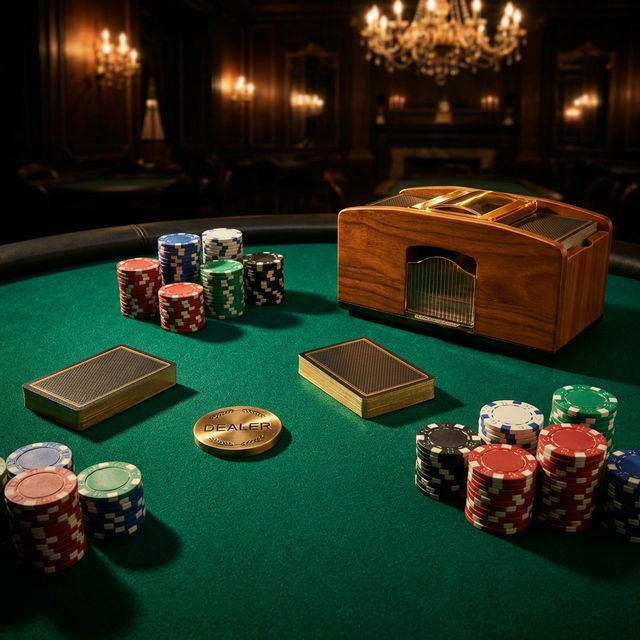
1. Poker Chips (The Foundation)
What you need: 500-chip set minimum for 6-9 players
Recommended: 750-1,000 chips for flexibility
Chip quality tiers:
> Pro Tip: Don't cheap out too much on chips. They're the centerpiece of your game, and cheap plastic chips make the whole night feel low-rent. Spend $75-100 on a good 500-chip composite set and you'll never regret it.
Colors and denominations:
Standard chip colors follow casino conventions:
| Color | Typical Value | Notes |
|-------|---------------|-------|
| White | $1 or $0.25 | Workhorse chip for cash games |
| Red | $5 or $0.50 | Secondary workhorse |
| Blue | $10 or $1 | Mid-value chip |
| Green | $25 or $5 | High-value chip |
| Black | $100 | Tournament rebuys, high stakes |
2. Playing Cards (Don't Use Bicycle Standards)
What you need: 2-4 decks minimum
Recommended: 100% plastic cards (Copag, KEM, Modiano)
Why plastic cards matter:
Cost: $10-15 per plastic deck online. Buy 4 decks and rotate them throughout the night.
> Pro Tip: Use two-deck rotation. While one deck is in play, the other is being shuffled. This speeds up the game and looks professional.
3. Poker Table or Playing Surface
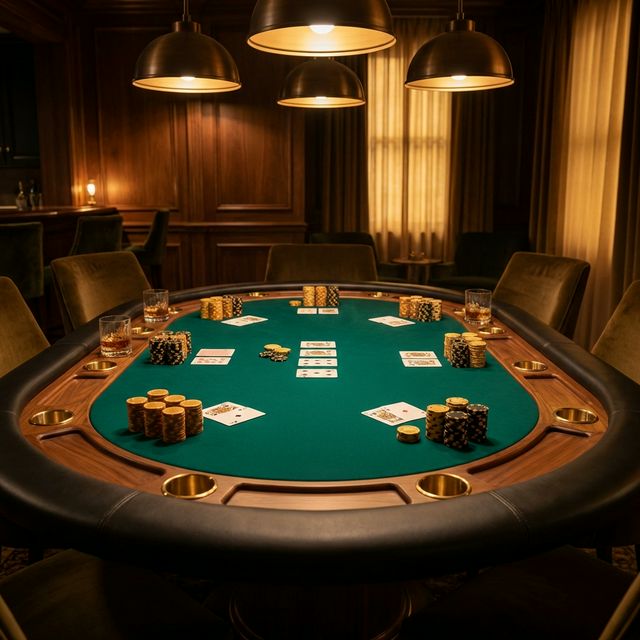
Options:
You don't need a fancy table to have fun, but felt makes a massive difference in sound, chip handling, and ambiance.
4. Timer (For Tournaments)
Use a free poker timer app:
These apps track blind levels, breaks, and play sounds when levels change.
5. Dealer Button
Buy a real dealer button ($5-10) or improvise with a coin, bottle cap, or keychain. Rotating the button is essential for fair play.
Chip Distribution Guide
Cash Games
Example: $$20 buy-in, blinds $0.25/$0.50
Each player gets:
Total: 55 chips = $20
For 8 players, you need 440 chips. A 500-chip set works perfectly.
General rule: Give each player 50-75 chips for cash games.
Tournaments
Example: 10,000 starting stack, blinds start 25/50
Each player gets:
Total: 33 chips = 10,000 in tournament value
For 9 players, you need ~300 chips. Easy.
General rule: Give each player 75-100 chips for tournaments.
Pre-Game Logistics
Seating Assignment
Method 1: Card draw
Shuffle a deck and deal one card face-up to each player. Highest card gets Seat 1, next highest gets Seat 2, etc. Redraws for ties.
Method 2: Use Poker Night's random seating (shameless plug)
Our platform auto-assigns seats randomly. No arguments, no drama.
House Bank
Designate one person as the bank. They:
Pro tip: Use Venmo/Cash App for settlements. No one carries cash anymore.
Game Flow Setup
The Little Things That Make a Difference
Music: Low-volume background music (classic rock, lo-fi beats) sets the mood without distraction.
Lighting: Dim overhead lights, add a lamp or two. You want visibility without harsh fluorescents.
Snacks: Finger foods only. Pizza, chips, pretzels. Nothing greasy that ruins cards.
Drinks: Beer, soda, water. Keep napkins handy. Spills happen.
Phone policy: "No phones during active hands" keeps the game moving.
Budget Breakdown
Here's what a quality home game setup costs:
| Item | Budget Option | Premium Option |
|------|---------------|----------------|
| 500-chip set | $30 | $150 |
| 4x plastic decks | $40 | $60 |
| Poker mat/topper | $25 | $120 |
| Dealer button | $5 | $10 |
| Timer | Free (app) | Free (app) |
| Total | $100 | $340 |
For $100, you can host a perfectly respectable poker night. For $340, you're running a semi-pro operation.
Common Mistakes to Avoid
Not enough small chips: If you run out of small denominations, no one can post blinds. Always have plenty of whites and reds.
Too many players for your chip set: 10 players with a 300-chip set = disaster. Know your limits.
No house rules: Establish rules BEFORE the first hand (string bets, showing cards, etc.).
Starting too late: If your game "starts" at 7 PM, half your players show up at 7:45 PM. Plan accordingly.
No breaks: Forcing a 4-hour game with no bathroom break creates grumpy players. Schedule breaks.
Wrapping Up
Hosting a poker night isn't complicated — you need chips, cards, a surface, and people. But the small upgrades (plastic cards, decent chips, a felt surface) elevate the experience from "meh" to "when's the next game?" Start with the essentials, upgrade over time, and focus on what really matters: good friends, fair play, and someone bringing pizza. Set up once, run forever.

