

Why Blinds Exist
The blinds are forced bets that create action and ensure there's always something to play for. Without blinds, players could simply fold every hand until they picked up aces. The blinds put constant pressure on everyone at the table and force play.
Small Blind (SB)
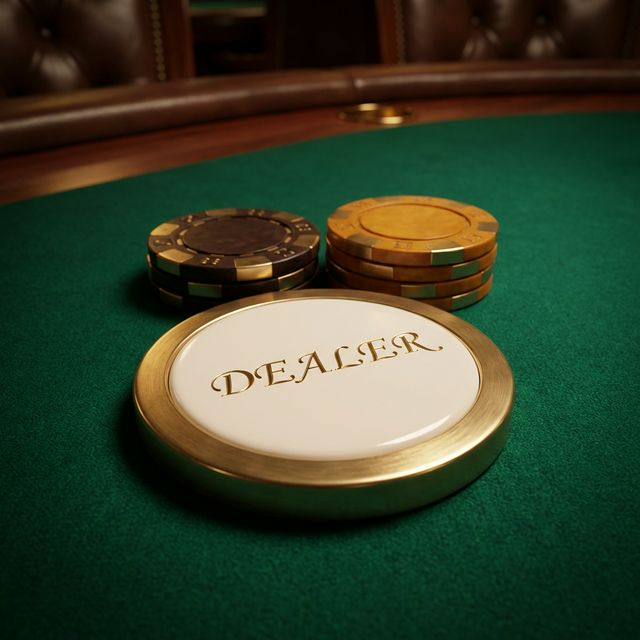
The player immediately to the left of the dealer button posts the small blind — typically half the minimum bet. For example, in a $1/$2 game, the small blind is $1.
Big Blind (BB)
The player two seats to the left of the button posts the big blind — the full minimum bet. In a $1/$2 game, the big blind is $2.
The button rotates clockwise after each hand, so everyone pays the blinds equally over time. In tournaments, blinds increase on a set schedule to force action as the game progresses.
Antes (Less Common in Cash Games)
Some games also use antes — a small forced bet from every player at the table. Antes are common in tournaments and create even bigger pots.
The Nine Positions at a Full Table

Position is the most important concept in poker. Where you sit relative to the dealer button determines when you act — and acting last is a massive advantage. Here are the nine positions at a full table, from earliest to latest:
1. Under the Gun (UTG)
First to act pre-flop. This is the worst position because you have no information about anyone else's intentions. You should play only premium hands from UTG — roughly the top 10-15% of starting hands.
2. UTG+1
Second to act. Still early position, still very tight. Only marginally better than UTG.
3. UTG+2 (Middle Position)
Third to act. You're starting to get slightly more flexibility, but you're still out of position post-flop. Play solid hands.
4. Lojack (LJ / Middle Position)
Fourth to act. Now you're in middle position. If the first three players fold, you can widen your range slightly.
5. Hijack (HJ / Late Position)
Fifth to act. Late position begins here. If action folds to you, you can open with a much wider range because you only have three players left to act behind you.
6. Cutoff (CO / Late Position)
Second-best position. Only the button acts after you pre-flop. From the cutoff, you can play aggressively and steal blinds. Post-flop, you act second-to-last.
7. Button (BTN / Dealer)
The best position in poker. You act last on every post-flop street. You have maximum information and can control the pot size. The button can play the widest range of hands — sometimes 40-50% of all hands in a steal situation.
> Pro Tip: The button is so powerful that elite players can be profitable with hands as weak as 7-2 offsuit when stealing the blinds. Position is everything.
8. Small Blind (SB)
The small blind is a trap. You've already posted half a bet, so you're getting better pot odds to call pre-flop — but you'll be first to act on every post-flop street. This is a losing position in the long run.
How to play from the SB:
9. Big Blind (BB)
The big blind closes the action pre-flop, which gives you more information. However, like the SB, you're out of position post-flop. Defend your big blind aggressively against late position steals.
How to play from the BB:
Why Position is the Most Important Concept
Here's what acting last gives you:
1. Information Advantage
You see what everyone else does before you act. If the board comes scary and everyone checks, you can bluff. If someone bets, you know there's strength. When you act first, you're blind.
2. Pot Control
From late position, you decide the pot size. Want to keep it small with a marginal hand? Check behind. Want to build a monster pot with the nuts? Bet and raise.
3. Stealing Opportunities
Late position allows you to steal blinds profitably with weak hands. If it folds to you on the button, you're essentially playing heads-up against two players who have random hands (the blinds). That's a profitable spot for aggression.
4. Bluffing Leverage
Bluffs work better from late position because you can represent any hand. If you're first to act and bet into three opponents, someone probably has something. If you're last to act and everyone checks to you, a bet often takes it down.
5. Value Extraction
When you have a strong hand, acting last lets you size your bets perfectly based on opponents' actions. Thin value bets (betting with a marginal hand that's slightly ahead) are much safer in position.
Adjusting Your Strategy By Position
| Position | Range Tightness | Strategy |
|----------|-----------------|----------|
| UTG / UTG+1 | Very tight (15%) | Premium hands only |
| Middle Position | Tight (20%) | Solid hands, avoid trouble |
| Hijack | Moderate (25%) | Widen slightly, more suited hands |
| Cutoff | Wide (30%) | Aggressive stealing, suited connectors |
| Button | Very wide (40%+) | Maximum aggression, steal relentlessly |
| Small Blind | Defensive | Defend vs. late position steals |
| Big Blind | Defensive | Defend 40-50% vs. button steals |
Common Mistakes Related to Position
Playing too many hands from early position: Beginners fall in love with hands like K-J or A-10 and play them from UTG. These hands are dominated by better hands and perform poorly out of position.
Not stealing enough from late position: Many players only raise from the button with premium hands. This is leaving money on the table. The button should be your cash cow.
Limping from the small blind: Completing the SB with trash hands seems cheap, but you're throwing money away. Either raise to take control or fold.
Defending the big blind too wide: Just because you're already in for one bet doesn't mean you should defend with any two cards. Fold garbage and save your chips for better spots.
Wrapping Up
If there's one concept that separates winning players from losing players, it's position. The same hand that's a fold from UTG is a raise from the button. Memorize the positions, understand the advantages of acting last, and adjust your ranges accordingly. Position isn't just important — it's everything.

